



Do you have plans to start or expand your investment portfolio in the Florida Real Estate Market soon? Whether you are just starting in the industry or looking to diversify your asset holdings, navigating the 2026 market requires shifting away from old assumptions and looking closely at real-time local dynamics.
After several years of breakneck appreciation, the Sunshine State’s housing market has transitioned into a more balanced, inventory-rich environment. For strategic real estate investors, this normalization is excellent news: the frenzy has cooled, giving buyers real negotiating leverage, price drops to capitalize on, and more predictable entry points. To maximize your passive income or fix-and-flip margins over the next few months, you need to focus on local market fundamentals.
Florida’s macroeconomic outlook remains strong, driven by consistent corporate expansion and steady population growth. However, real estate is fundamentally hyper-local. Success in 2026 relies on identifying submarkets where housing demand outpaces supply, or where specific demographics create highly profitable niches for private capital investments.
Commonly celebrated as a global tourism hub, the Greater Orlando metropolitan area remains a powerhouse for both long-term rental demand and creative redevelopment. However, the days of automatic 15% annual price spikes have settled into a sustainable, mature growth phase.
With homebuilders aggressively adding supply via new construction, investors targeting resale single-family homes should focus on established urban hubs or value corridors. Premium neighborhoods like Winter Park, Baldwin Park, and College Park continue to see strong demand, while the southern corridor in Kissimmee offers attractive entry points under $375,000.
As Florida’s state capital, Tallahassee provides a unique combination of institutional stability, steady employment via state government and major universities, and a lower cost of entry than coastal metros.
Because the sale-to-list price ratio remains high at nearly 98%, fix-and-flip operators must look for off-market or distressed inventory in historic neighborhoods like Levy Park and Midtown where value can be rapidly added through targeted renovations.
Jacksonville and broader Duval County offer something few other major metropolitan markets can: affordability at scale combined with persistent corporate in-migration and a massive industrial port economy.
According to localized market overviews from industry authorities, the broader structural outlook remains resilient:
“Industry analysts agree that a housing market crash is unlikely. Real estate experts anticipate modest, sustainable growth rather than a downturn… providing both buyers and sellers with room to operate without undue pressure.” — Move with Momentum Real Estate Insights
Investors looking to rehab or hold in Jacksonville should explore historic, walkable urban pockets like Riverside, Avondale, and San Marco, where renovated bungalows command premium pricing, or check the fast-growing southern corridors near Bartram Park.
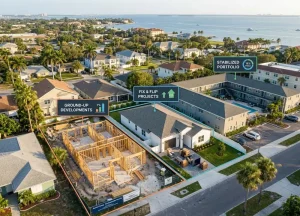
A balanced real estate market moves quickly for buyers who can present clear, reliable terms. In 2026, traditional bank lending criteria remain rigidly bound by slow underwriting timelines and restrictive look-backs, which can cost you a profitable contract on a distressed asset.
Because every investment property is structured differently, your financing should be equally tailored. Partnering with a direct private money lender like Gauntlet Funding gives you a decisive execution advantage:
Don’t let rigid institutional guidelines hold your portfolio back in a buyer-favorable market environment.
Ready to clear your next closing table? Speak with a Gauntlet Funding Loan Specialist today or apply online to get pre-approved in minutes.








